Now let’s cook
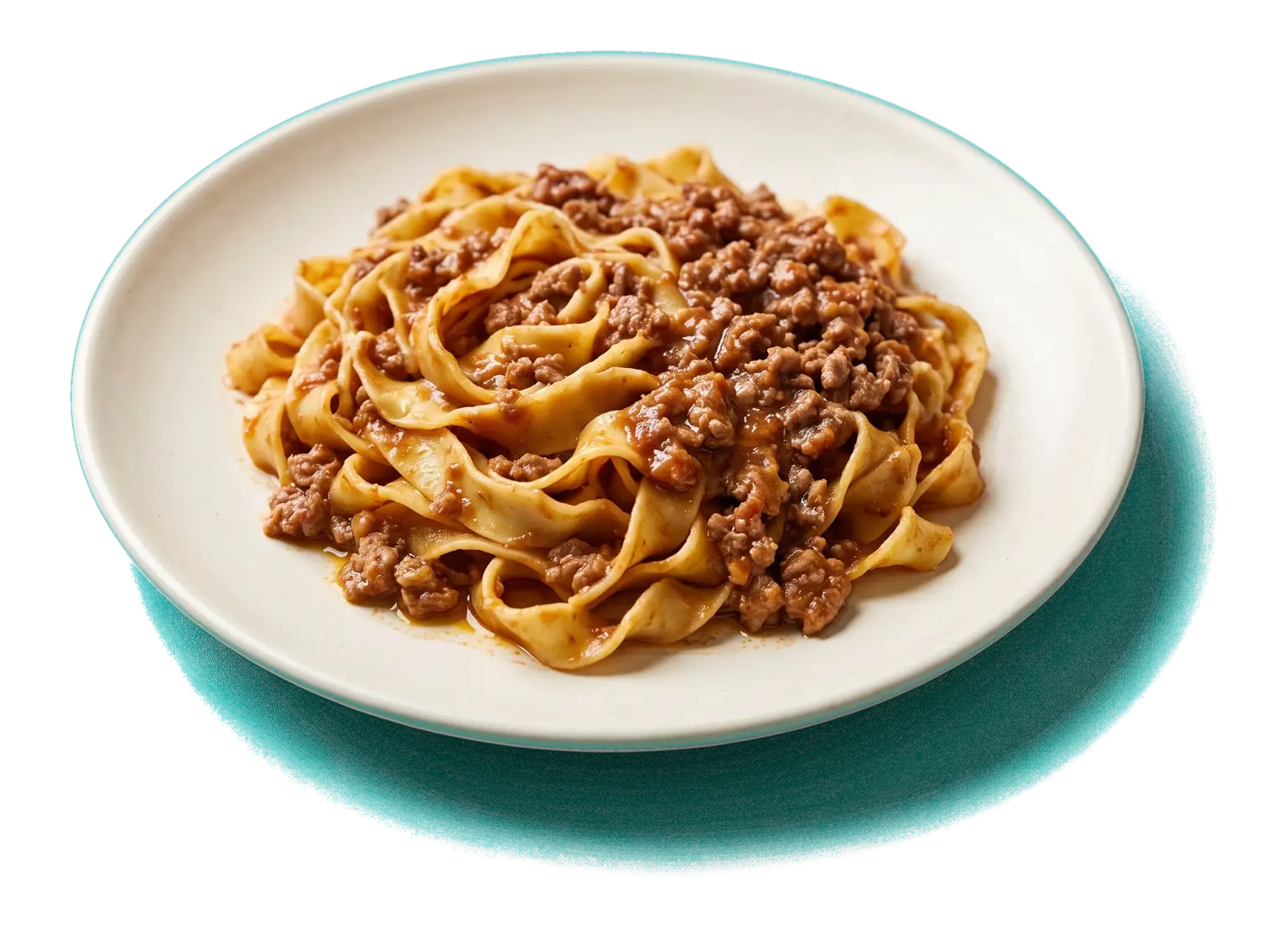
Bolognese. Today, with horse meat. The heavy pot and the two patient hours stay where they were. The main meat changes.
Ingredients
- 3 tbsp extra-virgin olive oilhere it starts the base together with the lamb fat
- 165 g raw lamb fatchopped small and rendered over low heat, it is where the ragù starts (raw beef fat can be used instead)
- 60 g onionyellow onion, chopped very finely by hand
- 60 g carrotchopped very finely by hand
- 60 g celery stalknot celeriac (the root), chopped very finely by hand
- 400 g minced horse meatin Kazakh cuisine, horse is one of the main meats and leaner than beef (minced beef can be used instead)
- 750 ml stockhomemade beef, chicken or vegetable stock, without stock cubes or concentrates
- 15 g tomato pastethick tomato paste, which adds colour and acidity to the sauce
- 200 g tomato passatasmooth sieved tomato purée without seeds or skins
- 200 ml whole milk (optional)cow’s milk, which softens the acidity of the tomato
- 5 g saltfine table salt, added at the end
- 1 g black pepperfreshly ground black pepper, added at the end
- 480 g egg tagliatelleflat ribbons of Italian egg pasta
Method
Chop the onion, carrot and celery very finely by hand: a blender would turn them into mush.
Chop the lamb fat small. Warm the olive oil in a heavy-bottomed pot over gentle heat, add the fat and render it, stirring with a wooden spoon, until the pieces shrink and start to turn golden and the pot holds noticeably more liquid fat.
Add the chopped vegetables and soften them for around 10 minutes, stirring often, until the onion turns translucent. They should not colour.
Turn up the heat, add the minced horse meat and cook for around 10 minutes, breaking up clumps, until no pink is left and a thermometer in the meat reads at least 71 °C.
Pour in 200 ml of hot stock, scrape up the browned bits from the bottom and let the liquid cook away almost entirely.
Stir in the tomato paste first, then the passata.
Add 250 ml of hot stock, cover and simmer on the lowest heat for around two hours. If the ragù gets too thick, add a little of the remaining 300 ml at a time.
After about an hour, pour in the milk if you are using it and let the ragù absorb it completely.
Once the ragù has darkened and turned glossy, season with salt and pepper.
Boil the tagliatelle in salted water for the time given on the packet, drain and toss through the ragù.