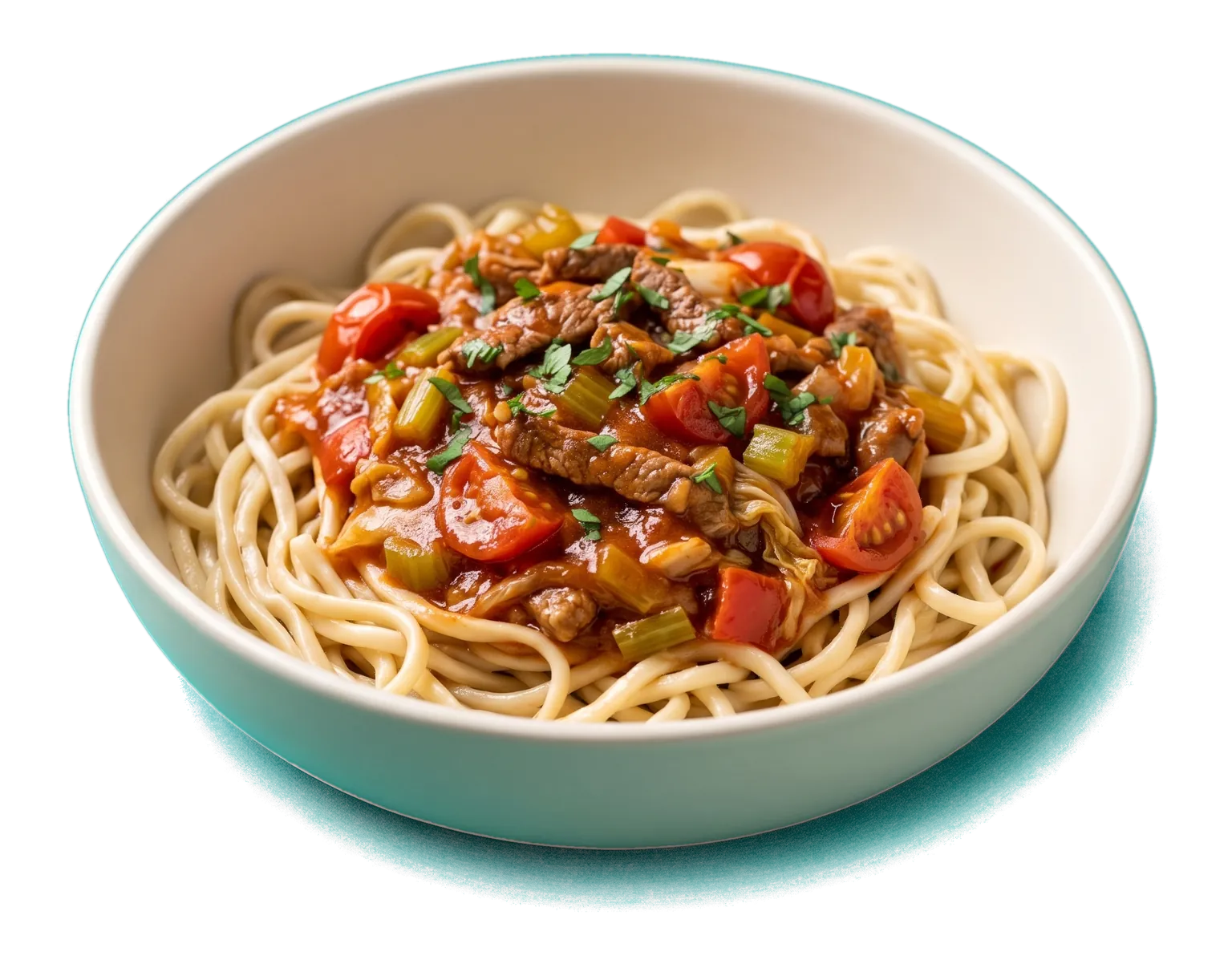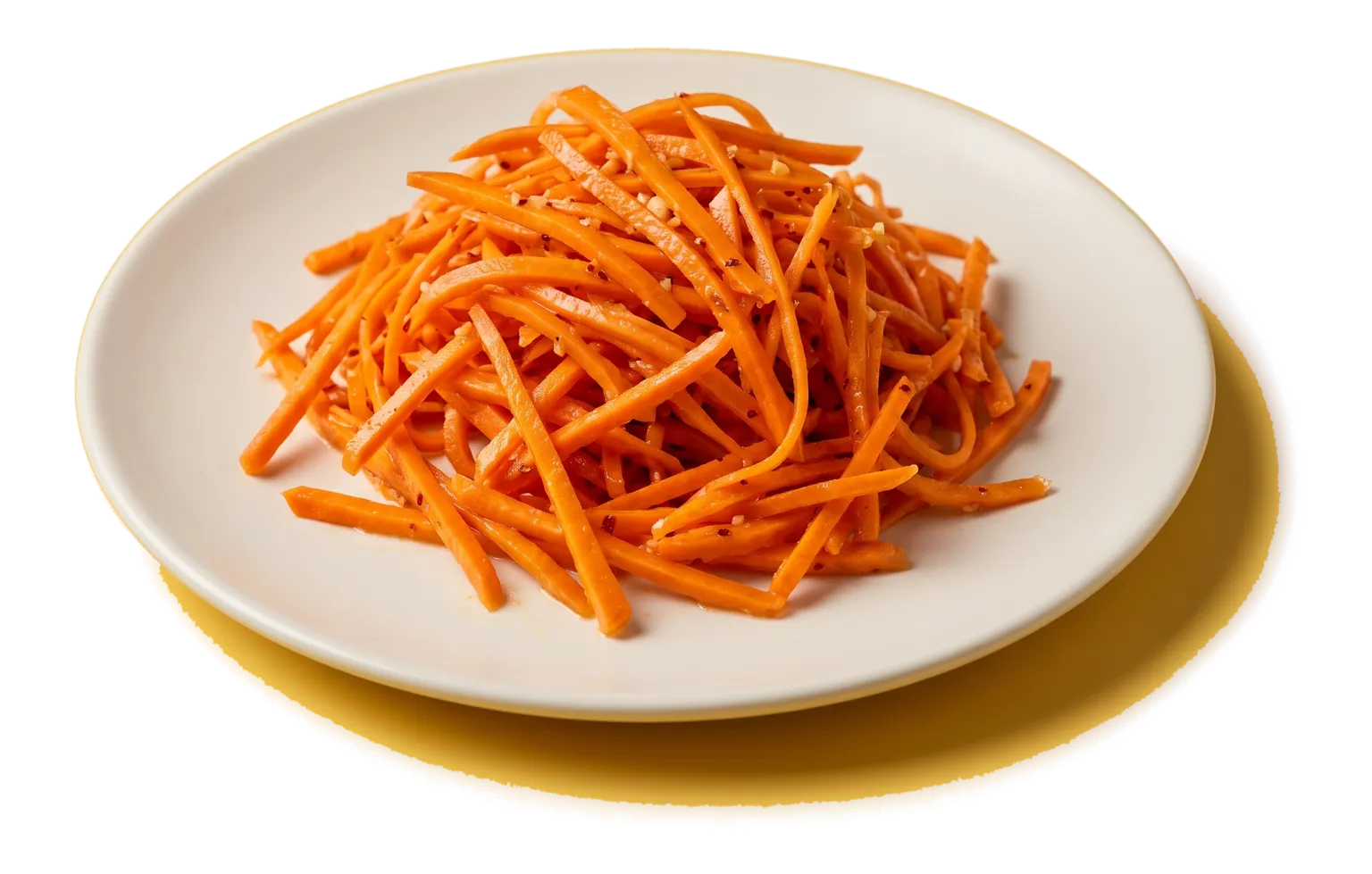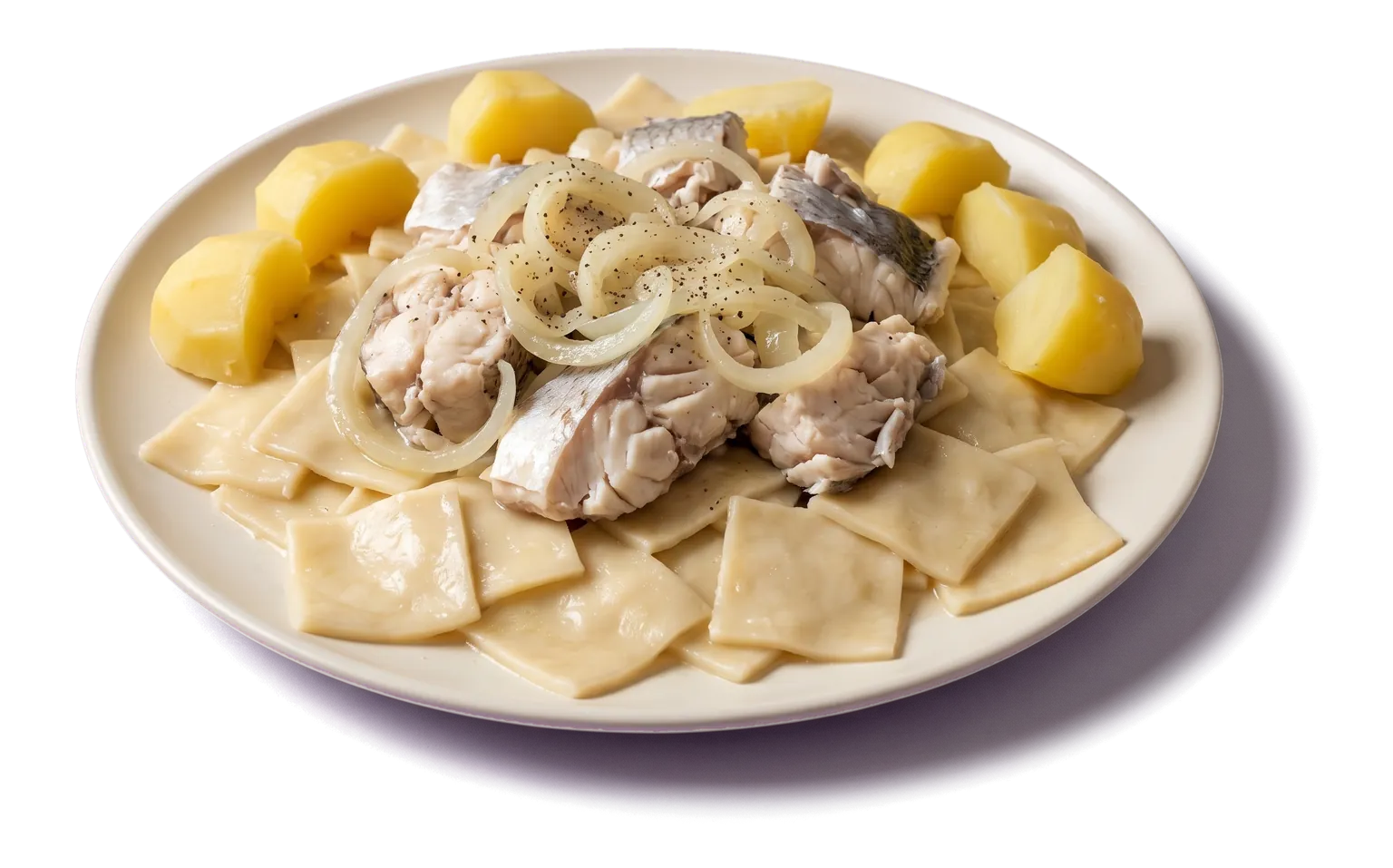
Now let’s cook
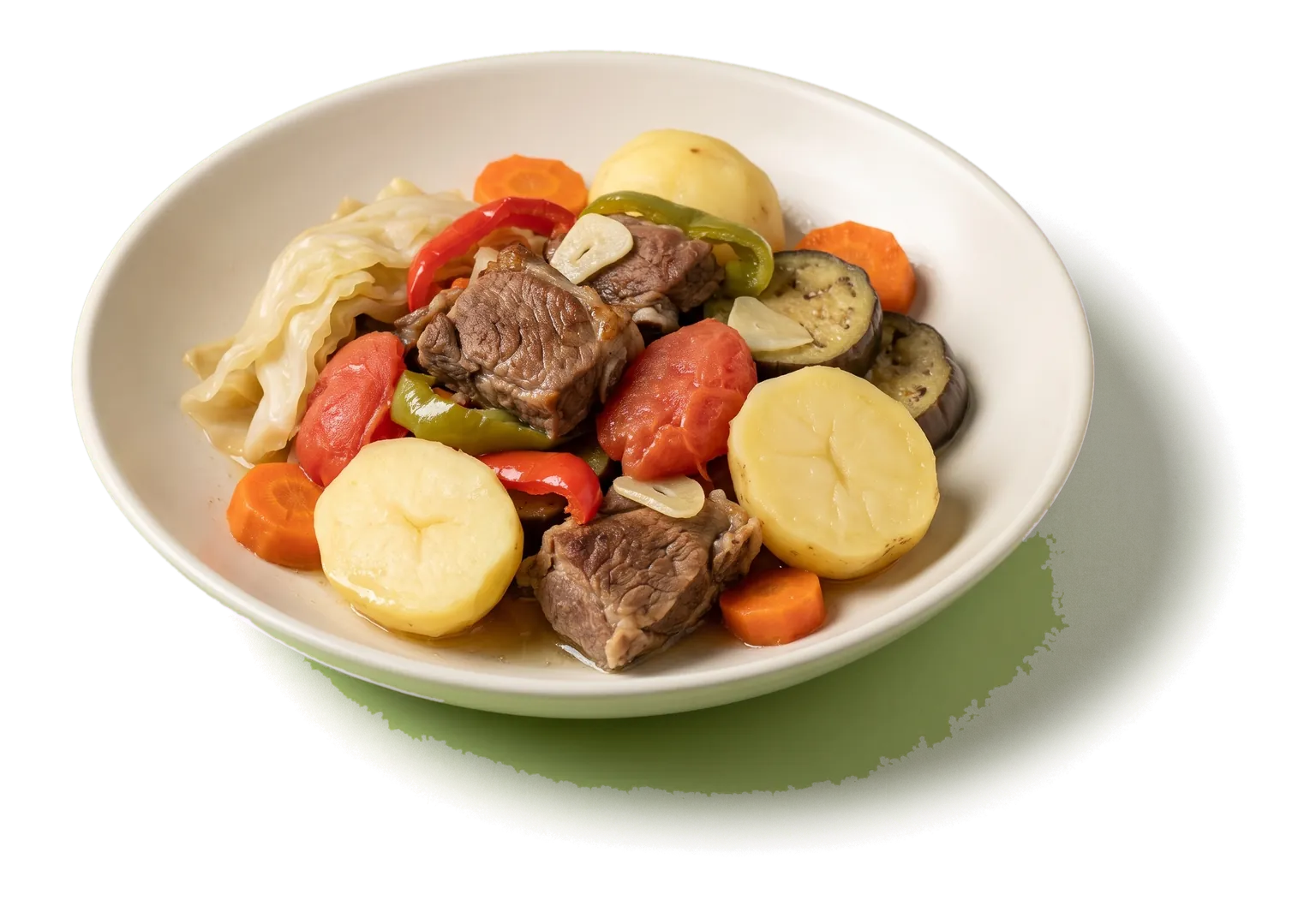
Dimlama. The meat and the vegetables are laid in layers and stewed under a tight lid.
Ingredients
- 100 g lamb tail fatfrom the tail of fat-tailed sheep, rendered first so the lamb browns in it
- 1000 g lambboneless, cut into pieces of 70–80 g each
- 2 tsp fine saltordinary table salt
- 1 tsp ground coriandera powder of coriander seed, not the fresh leaf herb
- 1 tsp ground cumina powder of cumin seed
- ½ tsp smoked paprikaground paprika with a smoky flavour
- 450 g onionabout 450 g, which is three medium onions, cut into rounds or half-rounds
- 40 g garlicfresh garlic (one clove weighs about 3 g)
- 150 g carrotabout 150 g, one carrot, cut into rounds or half-rounds
- 300 g aubergineabout 300 g, one aubergine, cut into rounds or half-rounds
- 300 g sweet pepperabout 300 g, which is two peppers: seeds removed, cut into rounds or half-rounds
- 1000 g potatoordinary potatoes: tubers of a similar size cook evenly
- 480 g tomatoesscalded and peeled, about 480 g (four tomatoes), cut into rounds or half-rounds
- 200 g white cabbagecoarsely chopped, about 200 g, spread over everything else
Method
Peel the potatoes, carrot and onions. Remove the seeds from the peppers. Pour boiling water over the tomatoes and peel off the skins.
Cut the lamb into pieces of 70–80 g each and the garlic into slices, and cut the onions, carrot, aubergine, tomatoes and peppers into rounds or half-rounds. Chop the cabbage coarsely. Leave the potatoes whole or cut them too.
Render the tail fat in a kazan. Brown the lamb in it, stirring now and then, until it changes colour. Add half of the salt (1 tsp), ½ tsp each of ground coriander and cumin, and ¼ tsp of smoked paprika.
Layer the onion with the garlic, the carrot, the aubergine, the peppers, the potatoes and the tomatoes over the meat. Sprinkle them with the rest of the salt and the spices and spread the cabbage on top.
Cover the kazan with its lid and cook over a low heat for about 2 hours, until the vegetables are soft.
The meat and the vegetables should be soft, and the lamb should come apart easily into fibres. Check the thickest piece with a thermometer: it should read at least 71 °C. If it reads less, cover the kazan with the lid and keep it on a low heat for another 15 minutes, then check again. Serve on a large shared platter or in portions, with the juices that have collected.
Where this dish comes from
Cuisines of Central Asia, Kazakhstan included, and of the Crimean Tatars
Dimlama is a meat and vegetable dish of the farming areas of Central Asia and of the Crimean Tatars. Uzbekistan, Kyrgyzstan, Kazakhstan and Tajikistan are named as the places the dish comes from. Vegetables with meat and tail fat are stewed in their own juice over a low heat in a kazan under a tight lid. In Kyrgyz, dymdama means «stewed, slow-cooked». The ingredients are laid in layers and cooked without stirring. Dimlama is served on a large plate called a lagan: the vegetables and the broth are eaten with a spoon, the meat by hand.